
- You are here:
- Home
- Success Stories
- Building a whole-school AAC approach at Russet House School
Building a whole-school AAC approach at Russet House School
How Russet House School has created a consistent approach that empowers pupils to communicate, participate and thrive
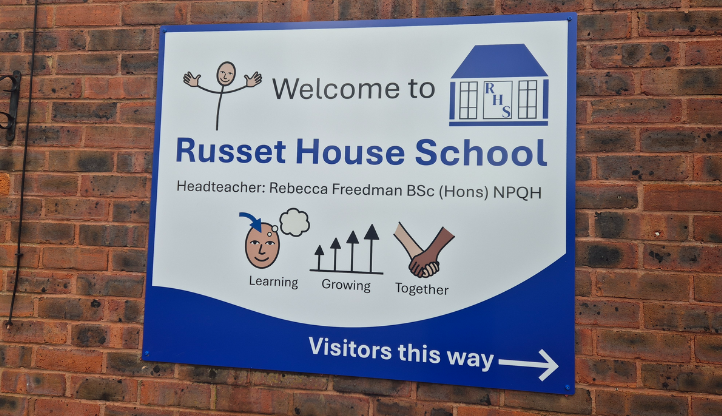
Russet House School, a specialist provision for autistic pupils aged 3–11 in the London Borough of Enfield, has embedded Widgit Symbols throughout its learning environment to ensure communication is accessible, consistent and meaningful for every pupil.


With all pupils experiencing language and communication differences, and many being non-speaking, the school has developed a communication approach that combines digital AAC through WidgitGo, low-tech communication resources created in InPrint, and communication boards installed across the school site.
By using the same symbol language across classrooms, playgrounds, dining areas and home-school communication, pupils experience a consistent communication system that supports understanding, independence and participation throughout their day.
In January 2025, the school embarked on a whole-school implementation of digital AAC through individual iPads installed with a personalised WidgitGo grid. Staff training and development work focused on creating and adapting language boards, followed by family training to support a consistent communication approach where possible. Pupils use their individual iPads and WidgitGo apps to support communication throughout the day, including during registration, whole-class teaching, subject-based work (especially English), and requesting food and toys.
This innovative approach has contributed to the school being shortlisted, alongside Enfield Council, for the MJ Achievement Awards 2026 in the Innovation in Building Diversity and Inclusion category. Judges praised the digital approach enabling non-speaking autistic pupils to communicate independently, as well as the transformative impact on pupils and families, reduced staff workload, and strong plans for mainstream rollout.
‘A standout example of inclusion shaped by evidence, empowerment and innovation.’
– Judge’s comment
Whilst pupils use personalised WidgitGo communication books on individual iPads, these resources are mirrored through printed communication books and visual supports created in InPrint. This means pupils can access familiar symbols whether they are learning in class, playing outside, eating lunch, travelling around school or communicating at home.
The school also uses InPrint to create worksheets, visual timetables, behaviour supports, labels, presentations and classroom resources, ensuring symbols are embedded across teaching and learning.
To further extend communication opportunities, Russet House has installed large Widgit Communication Boards across three playgrounds, the PE hall and dining hall. The school is also incorporating symbols into signage around the site, creating a more inclusive and accessible environment for pupils, families and visitors alike.
The school's approach has led to:
- Increased spontaneous communication with peers, staff and families.
- Greater independence and reduced reliance on adult support.
- Improved participation in learning and use of subject-specific vocabulary.
- Enhanced pupil voice, including greater involvement in EHCP meetings and decision-making.
- Increased confidence for anxious or reluctant communicators.
- Improved consistency between school and home communication approaches.
By creating a communication-rich environment where the same symbols are used across digital tools, printed resources and physical spaces, Russet House School has ensured that communication support is available wherever and whenever pupils need it.
 Make your own symbol materials
Next Success Story - Bladon House School: empowering pupils to communicate, learn and thrive