
- You are here:
- Home
- Success Stories
- Widgit Symbols in action across Kids Planet Nursery group
Widgit Symbols in action across Kids Planet Nursery group
From daily routines to emotional regulation, nurseries across the Kids Planet group are using Widgit Online to give every child a voice while supporting inclusion in early years education.
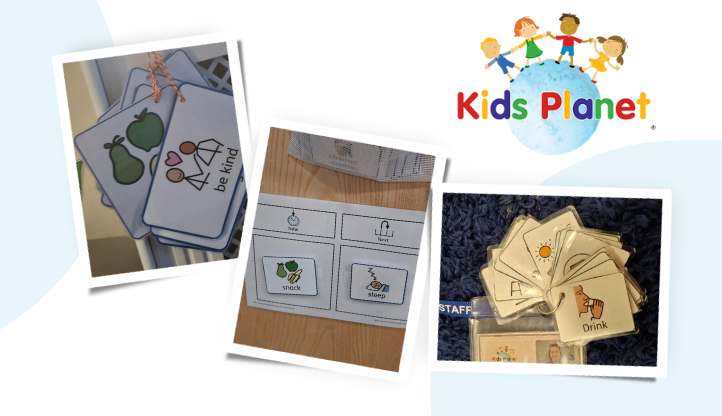
As an award-winning, family-owned group of over 240 nurseries across the UK, Kids Planet are huge champions of Widgit, with the majority of their settings using Widgit Online. We spoke with Ainsdale nursery manager Nicola Critchley, and Warrington nursery manager Rebecca Gee, to explore how Widgit Online is transforming communication, inclusion, and confidence across their settings.


Can you tell us a bit about Kids Planet nurseries and the children you support?
Nicola
We support a wide range of children with varying needs at Ainsdale. Some children are already on setting support plans with speech, language, and comprehension as the main focus. We also have one child with an EHCP who was previously non-verbal, but whose language is now beginning to emerge. Following the WellComm Assessment of some children within our care, staff can better gauge their level of understanding, and the additional support they may need as a result.
Rebecca
Kids Planet has a dedicated SEND team who provide support across all areas of special educational needs and disabilities. They offer guidance on strategies and deliver regular staff training. At Warrington, the team supports autistic children who require varying adjustments to provision, a deaf child with global developmental delay, and others with emerging needs. Many children are receiving support for speech, language and communication, with some already referred to or working with Speech and Language Therapy (SALT). The nursery also works with children who are learning English as an additional language (EAL). Currently, six children are being supported with Individual Education Plans, 29 with monthly setting support plans, and two with tracker support plans.
How are Widgit Symbols used on a day-to-day basis in your settings?
Nicola
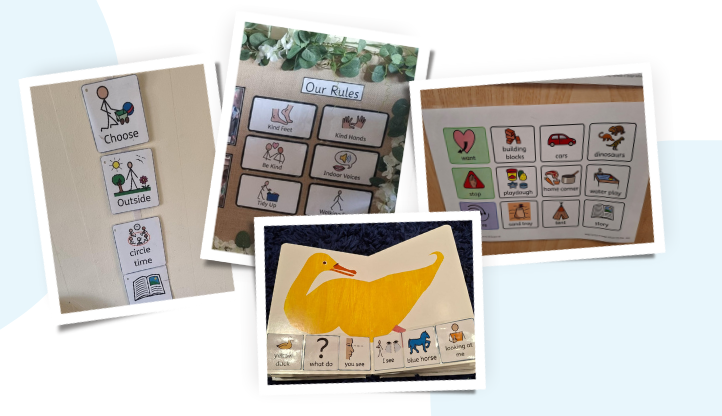
We use Widgit Symbols throughout the nursery to help children understand and follow their day. Each morning, staff begin with a ‘Good Morning’ song, followed by a visual outline of what will happen. Large printouts of the symbols are displayed on the wall in sequence so that children can check them at any time. To ensure consistency, staff also carry the same symbols on their lanyards. Widgit Symbols are also part of our song and story time. Children choose which song they’d like to sing by pointing to the printed symbol, giving them an active role in shaping the session.
Rebecca
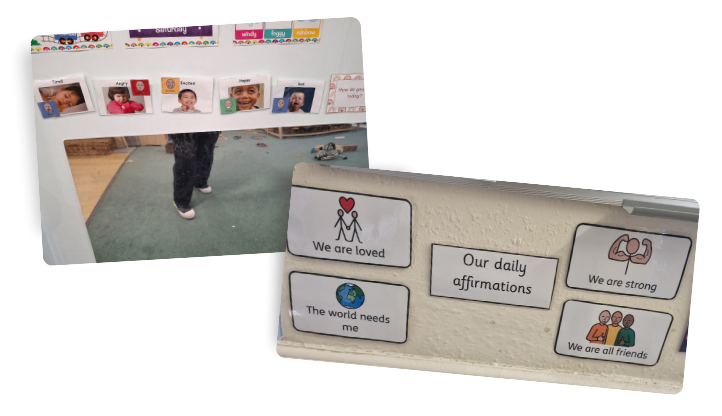
I use Widgit Symbols in a variety of ways to support our children, particularly those who are non-verbal or find transitions challenging. Two of our children use Widgit Symbols on their choice boards every day to express their wants and needs to staff. For children with communication and language delays, or those waiting for a SALT appointment, I use the six-picture Widgit Online templates for parents and staff to use both in nursery and at home. If a child is struggling with pronunciation, I make a template featuring objects that start with the target letter sound so that they can practise with an adult. Widgit also helps with emotional regulation. For one child, I have created personalised social stories to support this. We also use them to support bilingual learning. One child hears Polish at home and English at nursery, but doesn’t yet speak confidently in either language. For this reason, we display both the Polish and English words with each symbol, enabling staff to say the word in both languages to provide consistent support.
Have you noticed changes in children’s communication, understanding, or confidence since using Widgit Symbols?
Nicola
Yes, children who could sometimes become disruptive have been much calmer as they know what is going to happen throughout each transitional part of the day. Our child with the EHCP can also communicate his wants and needs better, as well as the children who are on setting support plans.
Rebecca
I have noticed an increase in children coming off setting support plans before the need for any referrals as they have made progress and their language has improved. Our two non-verbal children have been thriving using the choice board, and actively point at the symbols to show what they need or want, i.e. drink, fidget, a snack, etc. Parents have also felt confident in continuing this learning at home with the tools provided, as it's easy for them to do.
Has using Widgit contributed to any wider outcomes, such as improved inclusion or readiness for school?
Nicola
Most definitely! Children who found it challenging to engage with adults are now able to communicate and are therefore willing to join in with adult-led activities used to support school readiness. For staff, it’s an absolute joy to see children who once played solitary or parallel now enjoying spending time with peers.
Rebecca
It has definitely improved inclusion. Non-verbal children now feel valued and know that they have a voice. I’ve also used Widgit Symbols as part of enhanced school transitions for three of our children, ensuring they have the same visuals for consistency and familiarity in their new environment.
What do you think are the biggest benefits of using Widgit Symbols in early years settings?
Nicola
Widgit Symbols give children a voice and an understanding of the world around them.
Rebecca
Widgit makes it quick and easy to put resources together, which is so important when time is limited! The symbols are really clear, and you can even add your own photos to personalise them for each child.
The use of Widgit Symbols across the Kids Planet Nursery group demonstrates how visual communication tools can transform early years education, enabling children to understand routines, express themselves, engage with peers, and move confidently toward school.
 Make your own symbol materials
Next Success Story – SEN2gether: empowering SEND families