
- You are here:
- Home
- Success Stories
- How the RFU makes T1 Rugby accessible for all players
Banishing barriers to build confidence: how the RFU makes T1 Rugby accessible for all players
Creating opportunities for communication, confidence and belonging through sport
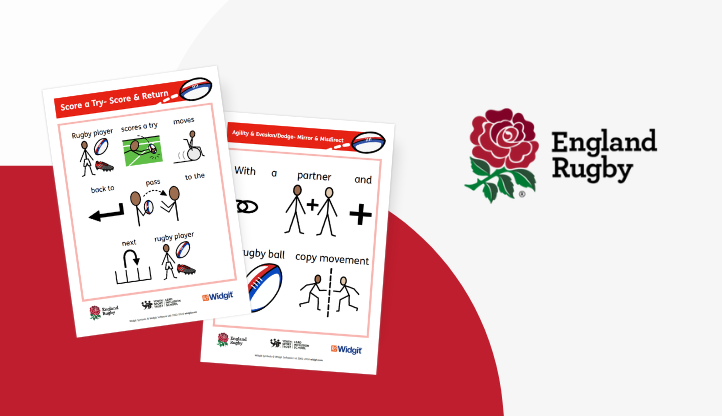
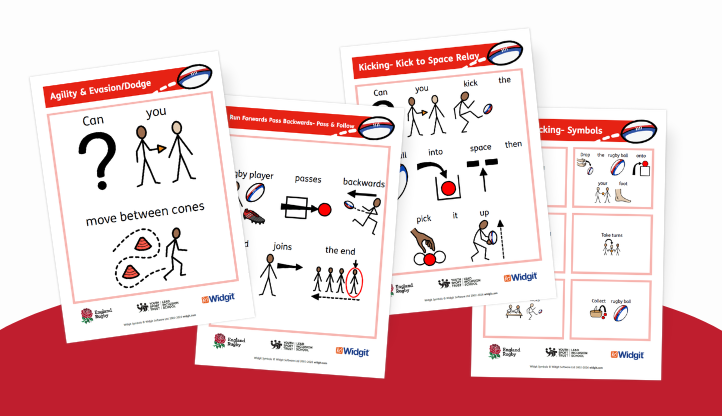
From grassroots clubs to international clashes at the Allianz Stadium, the Rugby Football Union (RFU) are custodians of ensuring everyone, regardless of their background or ability, can find a place on the pitch. We spoke to Schools and Colleges Manager, Chris Sigsworth, about how Widgit is helping make T1 Rugby more inclusive for young people with SEND, or anyone with a communication barrier.


Can you provide some background on this project and the goal of making T1 Rugby more accessible?
At the RFU, we passionately believe rugby is a game for everyone, but we recognise that the traditional contact element can sometimes feel like a barrier. Over the last few years, we’ve been actively championing T1 Rugby: the first non-contact format of the game that mirrors the characteristics of contact rugby, including lineouts, scrums, kicking, tackles and breakdowns, while remaining easy to learn and simple to play. T1 Rugby has an emphasis on fun and inclusivity, providing a welcoming and safe environment for people of all ages, abilities and backgrounds.
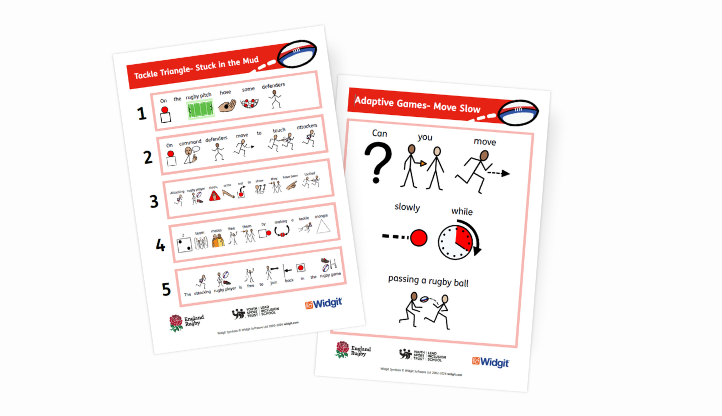
As we grew this format across the country, particularly within education, we kept hearing the same crucial question from educators: ‘What about young people with SEND?’ We realised that to make T1 Rugby truly universal, we needed to remove the communication and learning barriers that stop kids from picking up a ball and giving it a go. Our goal with this project is to provide symbol cards and tailored communication tools that empower and educate teachers, giving them the confidence to deliver T1 sessions that are accessible to every student.
Are these resources intended specifically for special schools, or can they be used in mainstream settings as well?
They can absolutely be used in both. The core objective is to reach SEND students everywhere, regardless of their educational setting. In a specialised environment, these tools provide the vital, structured support required for student engagement. However, our hope is that in mainstream schools, these symbolised resources do something even broader. By integrating them into mixed-ability PE lessons, they not only assist those with specific additional needs, but they also foster empathy, compassion, and understanding among all children. It shows the entire class that with the right support, everyone can play together on a completely level playing field.
Beyond the physical game, what kind of transferable skills and long-term impact do you hope these resources will unlock for young people?
On the surface, there are the obvious physical benefits; improving gross motor skills, agility, hand-eye coordination, and spatial awareness. But the true impact goes much deeper than that. On a cognitive level, T1 Rugby develops strategic thinking, real-time problem-solving, and quick decision-making.
Crucially, we should never underestimate the sheer importance of fun and joy. By using Widgit Symbols to clarify rules and expectations, we are removing the frustration of communication barriers. This unlocks the simple pleasure of being active with friends, building teamwork, and ensuring every young person leaves the pitch feeling like they belong to a community. These are transferable life skills that will benefit them far beyond the touchlines.
How does this project align with the core values of England Rugby?
Our game is anchored by five core values: Teamwork, Respect, Enjoyment, Discipline, and Sportsmanship (TREDS). These symbolised resources sit right at the heart of those principles by actively breaking down the barriers to inclusion. True sportsmanship and respect mean ensuring no one is left on the sidelines watching.
This project isn't just about the children directly using the communication aids to reach their full potential; it’s about elevating the entire sporting environment for everyone involved. That includes the teachers and coaches on the ground, who now feel fully equipped and empowered to lead these inclusive sessions with absolute confidence.
This project was a significant collaboration. Who else was involved in bringing it to life, and is there potential to see it used beyond schools?
This was a true, heavyweight partnership between the RFU, Widgit, and the Youth Sport Trust. We also relied heavily on the lived experience and expertise of lead inclusion schools to ensure the resources were technically accurate, practical, and genuinely useful for the people on the ground.
While we are launching these resources with a firm focus on the education sector, the potential is limitless. There is no reason why local grassroots clubs running T1 Rugby shouldn't benefit from these practical tools too. We want to see this inclusive ripple effect move out across the entire rugby community, ensuring anyone can go to their local club and find a game (hopefully along with some new friendships) waiting for them.
 RFU Symbol Cards
 Make your own symbol materials
Next Success Story – How Widgit supports play, learning and care at Symbol-Friendly® Flying Start Luton